![[personal profile]](https://www.dreamwidth.org/img/silk/identity/user.png)
How stress causes an eczema flare up
2026-Mar-22, Sunday 12:00![[syndicated profile]](https://www.dreamwidth.org/img/silk/identity/feed.png) sciam_feed
sciam_feedScientists have identified the neurons that worsen the condition during stress
sciam_feedScientists have identified the neurons that worsen the condition during stress
sciam_feedThe science-fiction film Project Hail Mary sees Ryan Gosling go to space in a state of suspended animation. But does the science suggest that’s possible?
apod_feed Spiral NGC 1300 and elliptical NGC 1297 are galaxies that
sciam_feedInfectious disease experts say shots against meningococcal meningitis can be lifesaving during an outbreak, but U.S. regulators have attempted to roll back recommendations of such a vaccine for children
sciam_feedDamage to the blood-brain barrier is linked to immune changes and cognitive decline
sciam_feedA cybercrime campaign called GlassWorm is hiding malware in invisible characters and spreading it through software that millions of developers rely on
bruce_schneier_feedThe population needs better conservation.
As usual, you can also use this squid post to talk about the security stories in the news that I haven’t covered.
sciam_feedAn astoundingly strong heat wave is not just setting records across the western U.S.—it’s pulverizing them
sciam_feedAutism researchers are working to counter a federal autism advisory panel that they say has vaccine skeptic members and a “striking absence of scientific expertise”
sciam_feedAgnes Pockels achievements in surface science have long been overshadowed by a popular and likely untrue story that she became interested in the subject while doing the dishes
sciam_feedThis science-fiction movie plays with quantum physics, space travel, astrobiology and mass-to-energy conversion
sciam_feedJust how big can a star become? The answer depends on when in cosmic history you’re asking the question
sciam_feedThe author of the novel Project Hail Mary breaks down aliens, anxiety and the process of bringing his story to the screen
bruce_schneier_feed404 Media has a story about Proton Mail giving subscriber data to the Swiss government, who passed the information to the FBI.
It’s metadata—payment information related to a particular account—but still important knowledge. This sort of thing happens, even to privacy-centric companies like Proton Mail.
earthobservatory_iod_feed
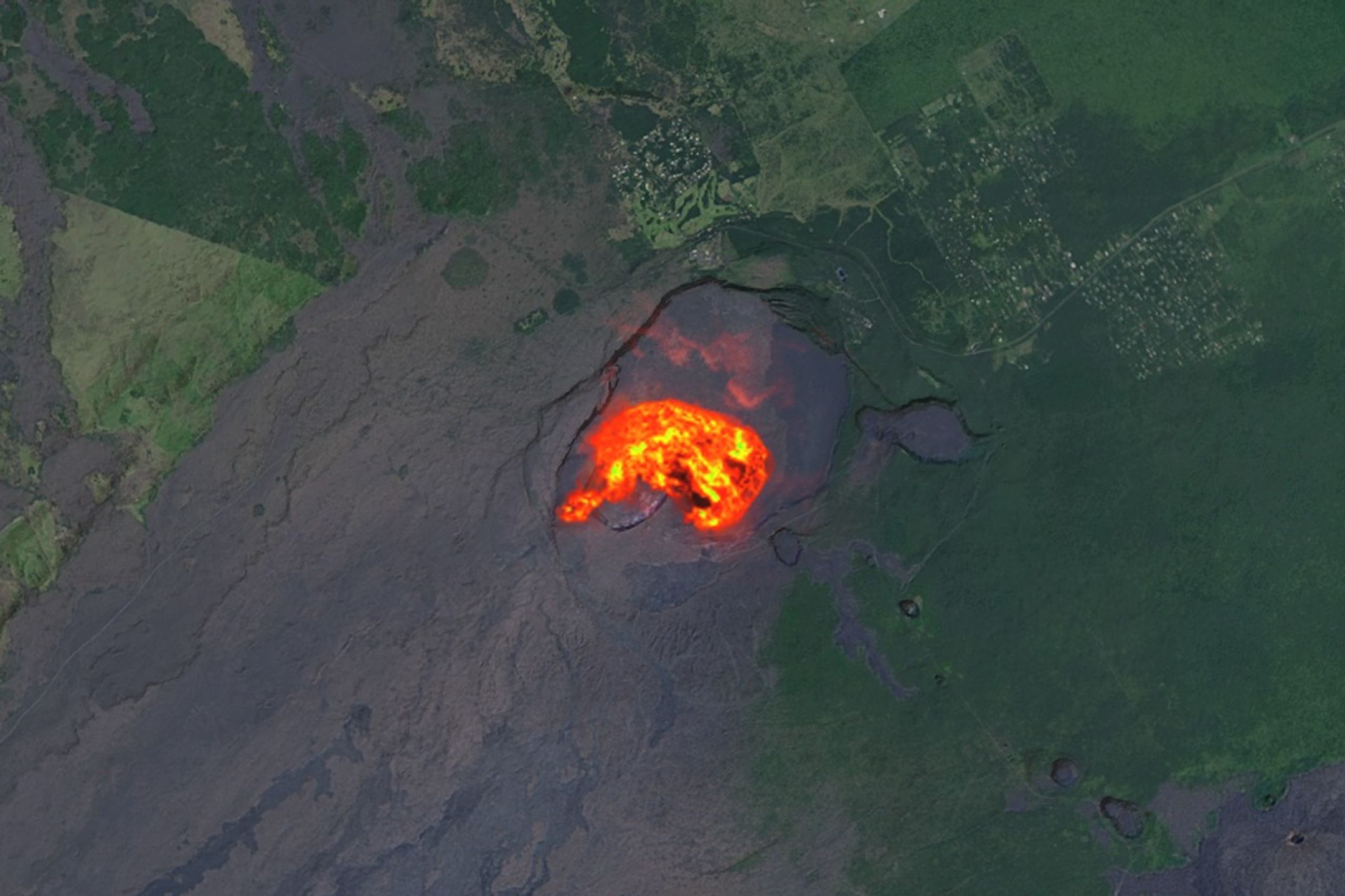
Kīlauea has entered its second year of episodic activity after reawakening in December 2024. Since then, the Hawaiian volcano has gone through dozens of bouts of lava fountaining, each lasting several hours to several days.
Activity ramped up once again on March 10, 2026, for episode 43 of the eruption. From approximately 9 a.m. to 6 p.m. local time that day, lava spewed from two active vents on the southwest side of Halema‘uma‘u Crater, adding to the ever-thickening layer of fresh basaltic rock in the summit caldera. The flareup also featured the highest lava fountains of the current eruption, estimated at 1,770 feet (540 meters). Meanwhile, ash and other airborne debris fell on communities up to 50 miles (80 kilometers) away.
About 4 hours after fountaining subsided, the Landsat 9 satellite passed over the Island of Hawai‘i. This image shows shortwave infrared and near-infrared data, acquired with the satellite’s OLI (Operational Land Imager) at 10:20 p.m. local time on March 10 (08:20 Universal Time on March 11), revealing heat emanating from the still-sizzling lava. That information is layered over a composite of daytime Landsat images and a digital elevation model.
An estimated 16 million cubic yards (12 million cubic meters) of lava erupted during the episode, according to the Hawaiian Volcano Observatory (HVO), bringing the total volume erupted across all episodes since December 2024 to close to 325 million cubic yards (250 million cubic meters). Over the same period, the depth of lava in the crater has increased by about 300 feet (90 meters).
While lava remained confined to the summit area, other erupted material traveled much farther. Images captured by satellites orbiting over the area during the daytime showed a volcanic plume drifting northeast from the vents. Volcanic gas and ash reached a maximum height in the atmosphere of more than 30,000 feet (9,100 meters) above sea level, the HVO said. The aviation color code was elevated to red during the eruption, and several flights at the airport in Hilo were canceled, according to news reports.
Volcanic fragments up to several inches in diameter fell along the north rim of the caldera and in adjacent communities. The hazards and accumulation of debris caused the temporary closure of Highway 11 and the evacuation of visitors from parts of Hawaiʻi Volcanoes National Park. Smaller particles were carried farther: people reported ash and Pele’s hair falling tens of miles to the north and east of Kīlauea, including in Hilo, Keaʻau, and other communities on the coast. Volcanic debris is an eye, skin, and respiratory irritant, the HVO warned, and it may affect water quality for those using rainwater catchment systems.
NASA Earth Observatory image by Michala Garrison, using Landsat data from the U.S. Geological Survey. Story by Lindsey Doermann.
Stay up-to-date with the latest content from NASA as we explore the universe and discover more about our home planet.

The volcano on Russia’s Kamchatka Peninsula continues to erupt after centuries of quiescence.
The volcano in Hawaii is one of the most active in the world, and NASA tech makes it easier for…

In its first documented eruption, the Ethiopian volcano sent a plume of gas and ash drifting across continents.
The post Restless Kīlauea Launches Lava and Ash appeared first on NASA Science.
sciam_feedFor years, ACIP has advised U.S. vaccine policy. But after changes to its membership made by health secretary Robert F. Kennedy, Jr., were challenged in court, the Trump administration is apparently mulling changing tack
sciam_feedWhether it’s a canary’s chirp or a treefrog’s croak, humans tend to prefer many of the same sounds that animals do themselves, a new study finds
sciam_feedScientists have found the oldest direct evidence for tectonic motion on Earth by more than half a billion years
sciam_feed - How stress causes an eczema flare upsciam_feed - Can future astronauts be put into comas for space travel like in Project Hail Mary?apod_feed - (no subject)sciam_feed - U.K.’s deadly meningitis outbreak shows importance of vaccinationsciam_feed - Brain’s protective barrier stays leaky for years after playing contact sportssciam_feed - GlassWorm malware hides in invisible open-source codeapod_feed - (no subject)bruce_schneier_feed - Friday Squid Blogging: Jumbo Flying Squid in the South Pacificsciam_feed - Extreme U.S. heat wave smashes all-time hottest March temperature recordsciam_feed - Rival ‘shadow’ group to RFK, Jr.’s autism science committee meets in D.C.sciam_feed - Agnes Pockels’ pioneering work was unfairly dismissed by tropes about women’s domestic rolessciam_feed - How accurate is the science in Project Hail Mary?sciam_feed - What’s the most massive star in the universe?sciam_feed - The real science (and the fun fiction) behind Project Hail Marybruce_schneier_feed - Proton Mail Shared User Information with the Policeapod_feed - (no subject)earthobservatory_iod_feed - Restless Kīlauea Launches Lava and Ashsciam_feed - Influential vaccine advisory panel ACIP may be ‘disbanded’ after lawsuit, says former vice chairsciam_feed - What animal are you? Humans and animals tend to like the same mating callssciam_feed - When did plate tectonics on Earth begin? New research finds some of the earliest clues